
Madagascar
Part one

When I was in college, people would sometimes talk about the places they wanted to visit. I would have one answer ready: Madagascar. Why Madagascar? One, because I knew there were animals there that were found nowhere else in the world (lemurs, specifically) and two, because it seemed like one of the farthest corners of the world.
Well, I’ve now been to Madagascar and can report that the lemurs are indeed fascinating and Madagascar is right in the middle of where it should be.
Why Madagascar now? Austin just spent his spring semester abroad there on a program run by the School for International Training (SIT) that satisfied his two requirements: earning STEM credits in a nominally Francophone country. “Nominally” because while French is an official language, it’s also the colonial language which some people resent. College educated and urban people speak French but the Malagasy all speak Malagasy (the word is both the name of the people and their language). The SIT program is based in the capital, Antananarivo (or “Tana”), and brought the students on trips around the country to study botany, zoology, ecology, and conservation efforts.
Julie, Mari and I went to visit Austin after his semester was over and our family toured around western Madagascar with a driver and guide on a 11-day itinerary arranged by a local tour company called Soul of Madagascar. (There’s a whole story about suspected fraud with the tour but it turns out our suspicions were unfounded. It was just our bad luck that we sent a wire transfer to Africa days after the owner of the company had died unexpectedly. Maybe I’ll unpack that in another newsletter.) We then went on a shorter trip to Andasibe with a hired driver and with Austin as our guide (he had spent three weeks there studying lemurs as part of an independent study project and knew the area well, including local park guides).
It was a terrific trip! We saw lemurs! Chameleons! Baobab trees! Tsingy! Austin, whose Malagasy language skills impressed all the locals, was a great guide. He helped lead our meanderings and when I found a leech on my hand, he was the first person I called. (And he was very calm, explained that it wasn’t likely poisonous and told me how to peel it off with the back of my knife so I didn’t kill it/infect any wound.) If you ever go to Madagascar, I recommend him as a traveling companion
Our trip felt—in the best way—like an intensive 2 1/2 week seminar as we stuffed our brains with historical, cultural, linguistic, and biological knowledge. There’s lots to tell, and I may send a few newsletters about the trip but first, you may need to be re-oriented, as I did.
On maps, Madagascar always looked to me like a small island just off the southeast coast of Africa. How is that wrong? Let me count the ways: The island is not small—it’s larger than California by about a third—and the fourth largest island in the world (after Greenland, New Guinea, and Borneo). It’s off the coast of Africa, but the Mozambique channel separating the island from the continent is 300-600 miles wide (say from here in the Boston area to Washington, DC or North Carolina) so it’s not “near” in the sense of Martha’s Vineyard or Nantucket off of Cape Cod. And while it’s definitely part of Africa, the Malagasy see themselves as an island on the western end of the Indian Ocean. This is evident in the language which is part of an Indonesian-Polynesian family (with loan words from Bantu, Arabic, French, and English), the faces of the people (who have a mix of African and Asian features), and the restaurant menus (which included local stews, Indian curries, Chinese fried rice and noodles, and French specialties [more magret de canard offered by local eateries than I expected]).
Another misconception I gathered from maps (particularly the ones I grew up seeing in North American classrooms) is that Madagascar is very southern. In fact, the Tropic of Capricorn passes through the island and the capital, Tana, is at about 18 degrees south latitude. To put that in perspective, Tana is about as far south from the equator as Jamaica and Puerto Rico are to the north. El Kurru, the site in northern Sudan where I’ve worked, is also 18 degrees north of the equator. So while May in the southern hemisphere is autumn, it ranged from cool in the mornings to unseasonably hot while we were in Madagascar.
And one more thing. The island has very few paved roads. Tana’s streets are paved (or cobblestoned) but between cities the roads were paved and pocked with giant potholes or just dirt tracks, occasionally only wide enough for one car. I don’t think we traveled at over 50 miles an hour while we were there. In fact, one day we spent 11 hours driving 330 miles from Antsirabe to Morondava—an average of 30 miles an hour. That’s just to say, after 18 days or so, we saw just one corner of this vast, beautiful country.
Okay, here’s a peek at what we saw:
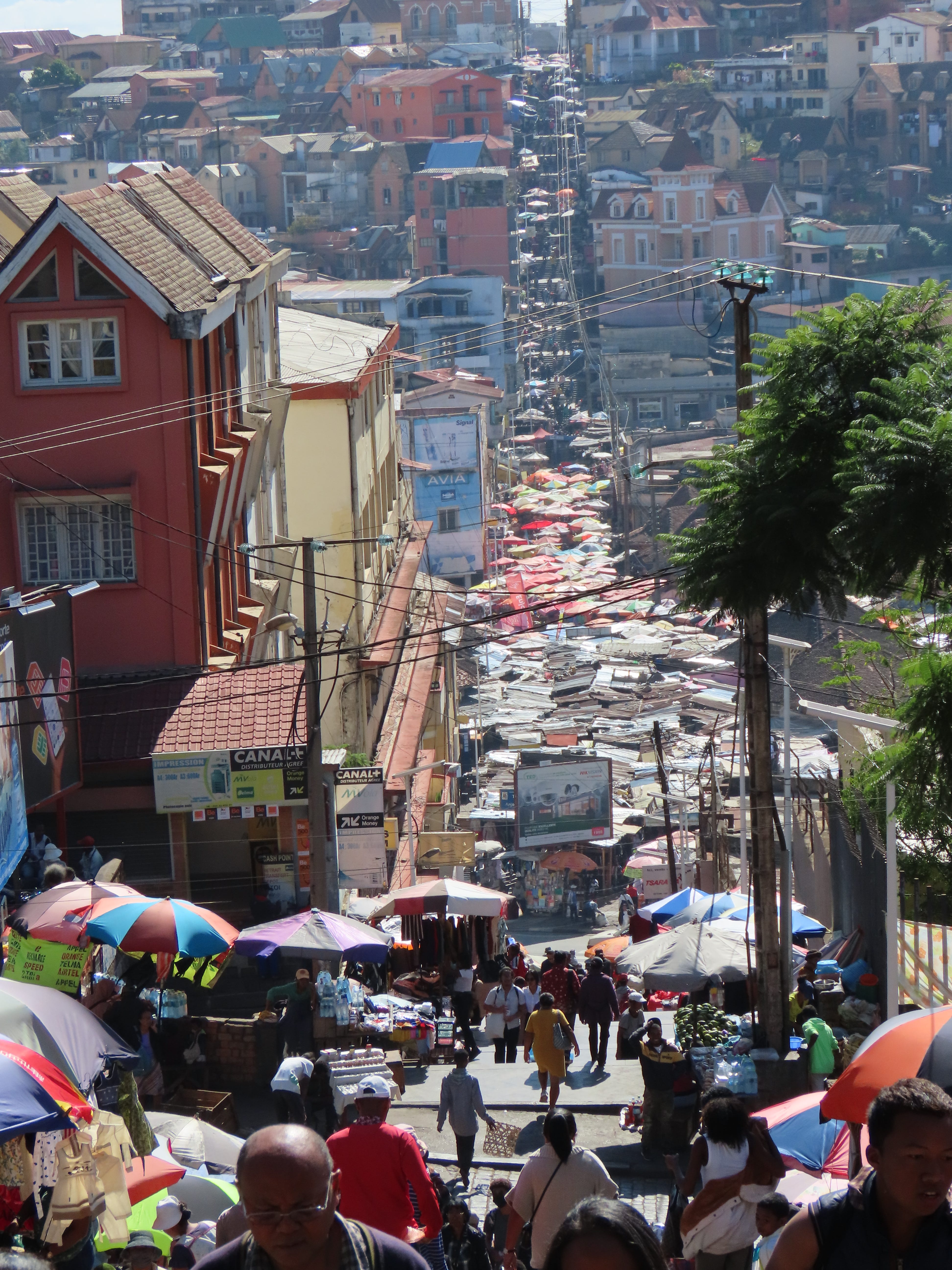
Antananarivo, like San Francisco or Pittsburgh, is a city built on and around hills. This is looking down a 5 or 6 story outdoor staircase from near where we were staying to the Analakely market of stalls covered with umbrellas.
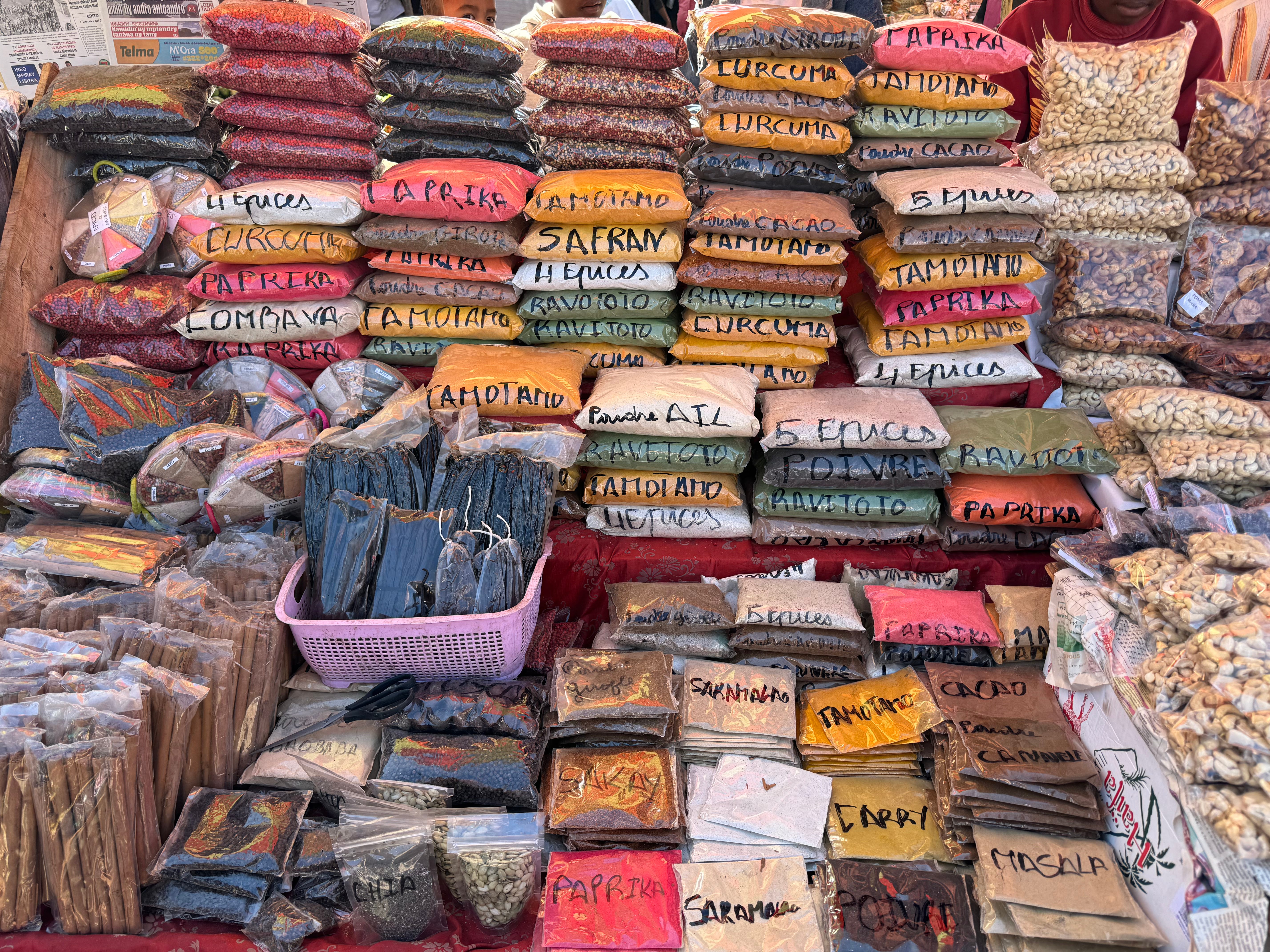
Spice stall in Analakely, with vanilla bean pods in the pink plastic basket. Reminded me of Middle Eastern souks. We limited our photography in Tana as we were warned that there were many pickpockets and people who might snatch our fancy phones.
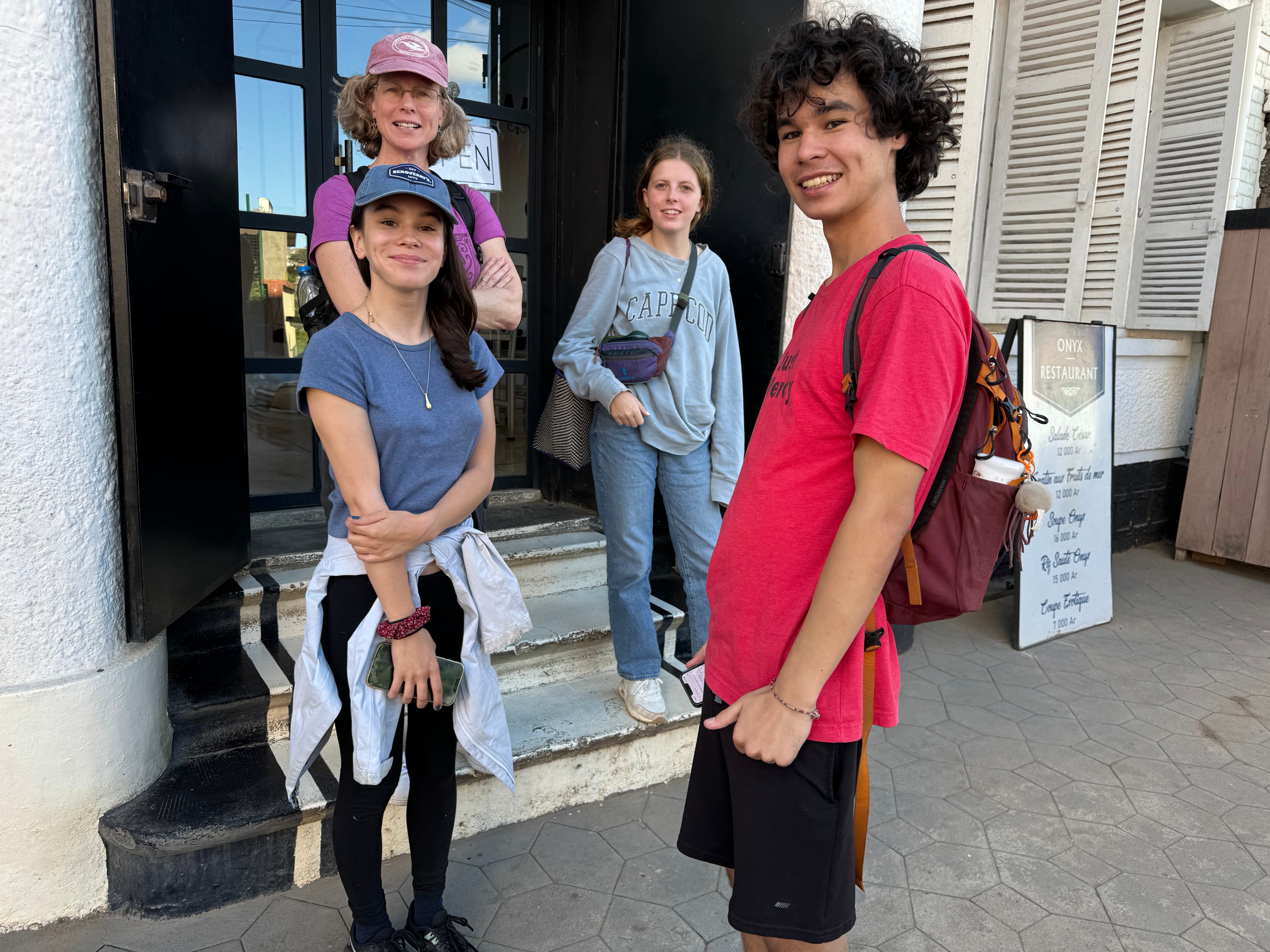
Walking around Tana with Austin’s friend Clara from the SIT program. There were ten kids from around the USA who were on the program and Clara and Austin both went to Newton South High School(!). Turns out I know her dad from the dog park.
Oh, and that chain around Mari’s neck? About two weeks later, some guy ripped it off of her from behind in the market. Not a pleasant experience, but luckily she wasn’t hurt.
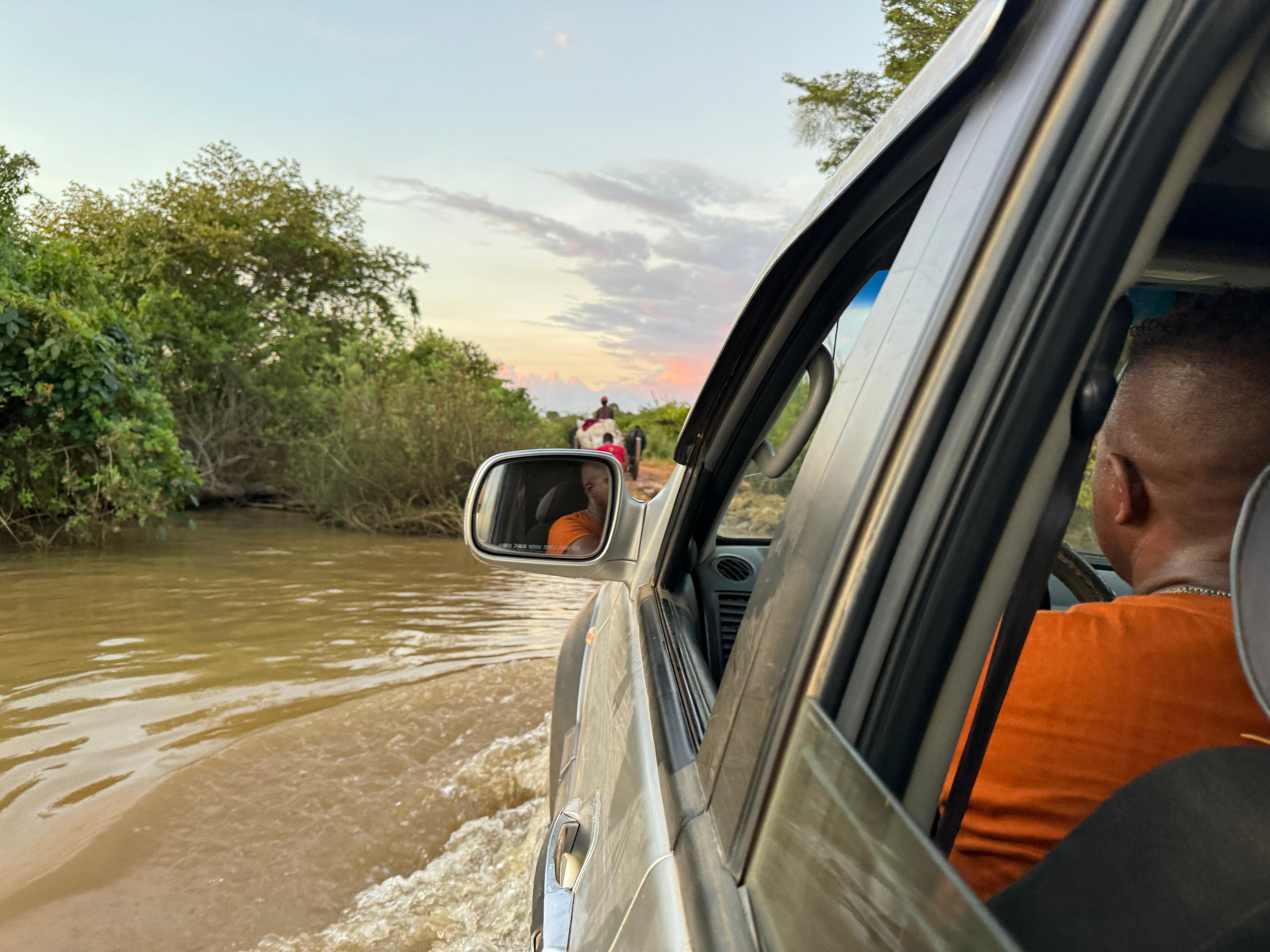
We had an excellent driver that took us west, but then we switched to a driver who specialized in the rough “roads” that took us to Bemahara National Park.
See the glimpse of sunset in the center? The sky was beautiful almost every night.
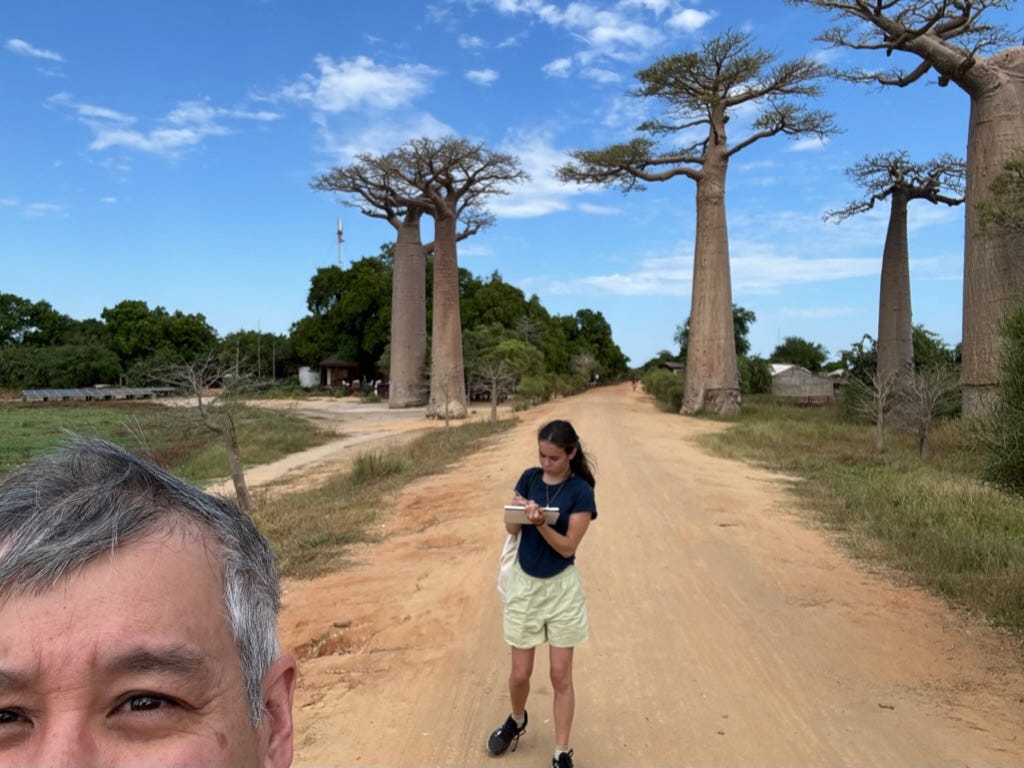
Avenue of the Baobabs. These magnificent trees are 800-1000 years old, with massive trunks that can hold enough water to survive months of drought. There are only 9 species of baobabs in the world, 2 on the African continent, 1 in Australia, and 6 in Madagascar. Oh, and this “avenue”? That’s part of Madagascar’s highway system. For real.
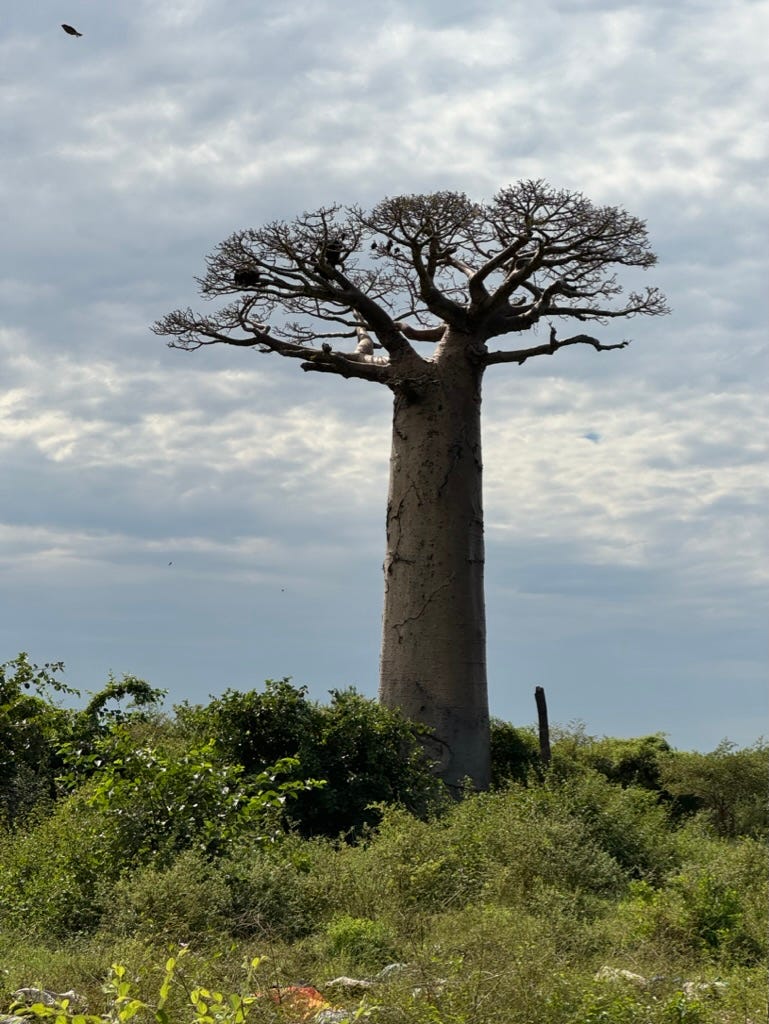
The baobab’s local name is reniala or “mother of the forest.”
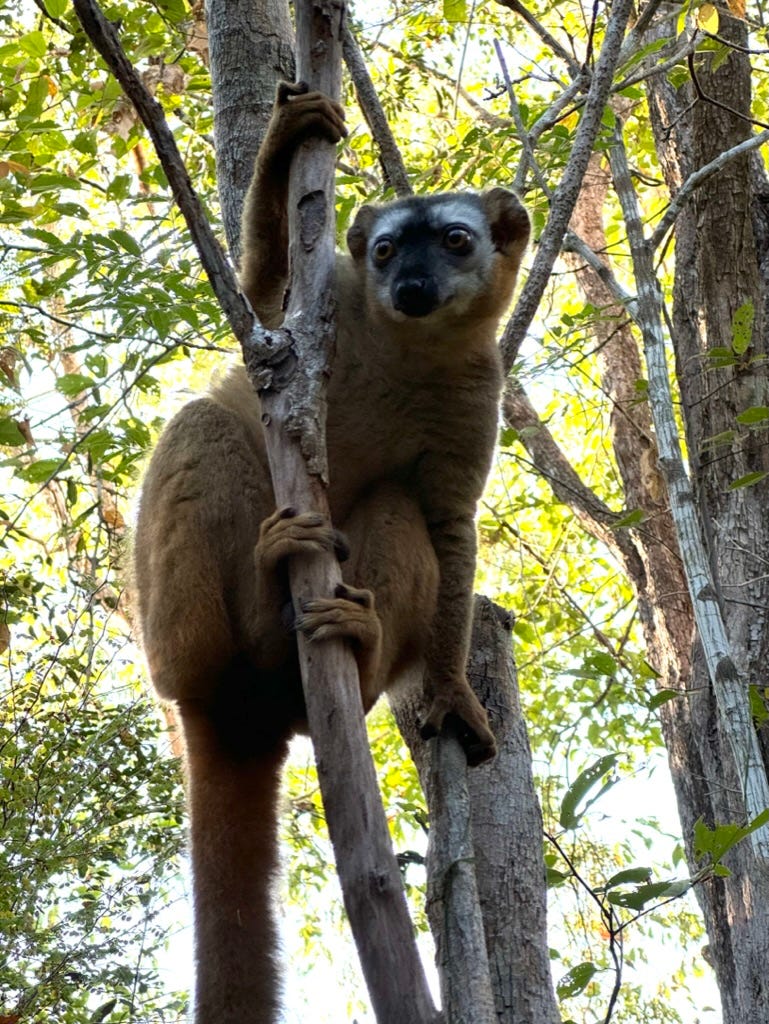
A red-fronted brown lemur. Watching lemurs climbing around, jumping from tree to tree was definitely a highlight of our trip. My neck has now mostly recovered from craning it, staring up into the trees at these playful and beautiful animals.
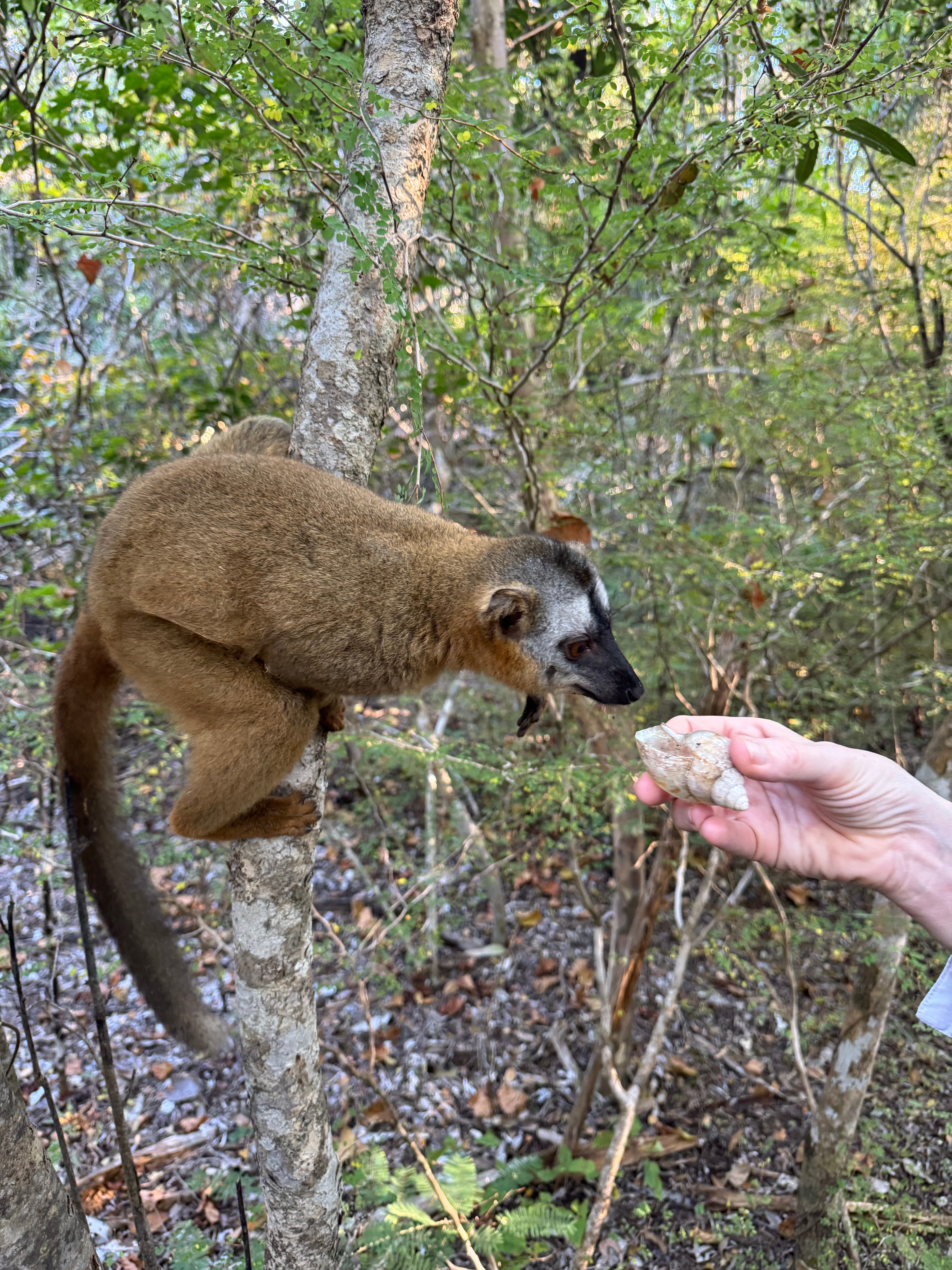
Rules about interaction are a little more lax at the private Kirindy reserve—the local guide encouraged us to offer water in snail shells found on the trail. That’s Julie’s hand in the photo. The lemurs would reach out and pull us closer to get a drink. Their padded fingers were both soft and strong.
It’s taking me a while to go through all the photos, but here’s a start, and I’ll send more soon.
Coming up: the Tsingy! More lemurs! Food!
(Send me questions about anything you are curious about, please!)
Amazing experience and thanks for sharing. Look forward to the next installment! Thank you